How Tensile Structures Are Transforming Modern Stadium Design
March 31, 2026 By admin
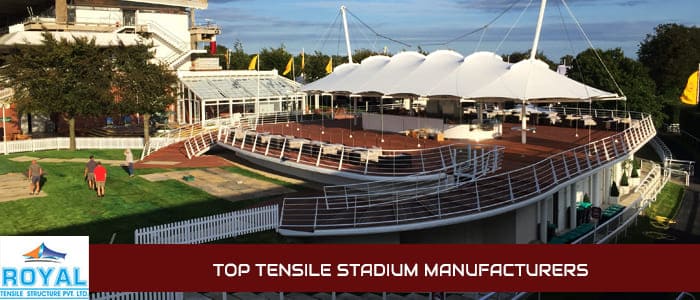
How Tensile Structures Are Transforming Modern Stadium Design
No longer considered as huge seating bowls, modern stadiums have become icons of architecture, communal centers, and high-performance centers, which are comfortable, safe, and sustainable. Another of the most powerful innovations that resulted in this change is the tensile structure. This blog tells us how the solutions of the tensile stadium structure are influencing the construction of today’s stadiums and why it is turning out to be the favorite of architects, engineers, and developers across the globe.
What Is a Tensile Structure?
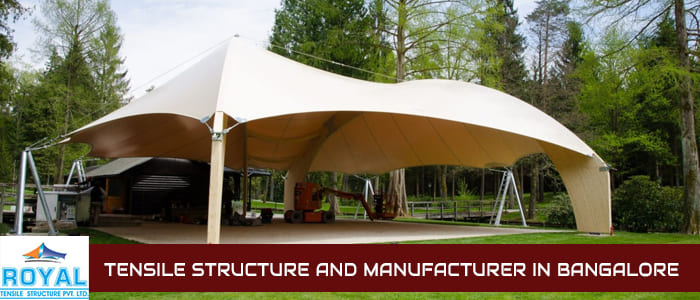
A tensile structure is a building system that employs tensioned membranes with the support of steel cables, masts, or frames. In contrast to the traditional concrete or steel roofs, tensile systems are used, which are not based on compression but tension, such that they cover a huge distance with less material. Common forms include:
- Roofs of tensile membrane structure.
- Fabric canopies that are supported by cables.
- Membrane systems: PTFE, PVC, or ETFE.
These are well-equipped for massive events such as stadiums, arenas, and sports complexes.
The Modern Architecture of the Rise of Tensile Stadium Structure
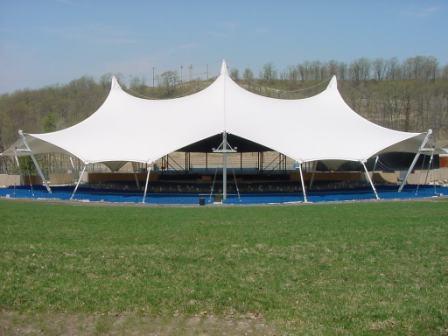
Stadium requirements include expansive column- and windshield-free spans, outstanding weather protection, and a beautiful appearance. Tensile stadium constructions fulfill all those needs and provide some extravagant capacities:
- Famous Architectural Vision: Membranes form fluid dynamic structures that immediately uplift the visual identity of a stadium. The shapes of stadiums can be identified as they are sculptured, particularly at night when they are on fire.
- Portable but Sturdy Design: Tensile structures are much lighter in comparison to conventional roofing systems. This minimizes foundation loads and allows the construction to proceed much faster without impairing strength and durability.
- Large Clear Spans: One of the strongest pros of the tensile structure design is that it can cover a vast seating area without columns inside the building to provide a continuous view to the spectators.
Increased Comfort and Experience of Spectators
The comfort of the fans is the primary feature of modern stadium design, and tensile structures are important:
- Weather Protection: Membrane roofs protect the spectators against the effects of sun, rain, and wind.
- Natural Daylighting: Tensile membrane structures are made easy to see through so that daylight can be diffused, but not artificial lighting, to minimize the use of artificial lighting.
- Thermal Comfort: High-technology fabrics are used to manage the amount of heat gained and to allow the flow of air.
Green & Environmentally Sustainable
The modern stadium development is a sustainable one. Tensile buildings help to achieve green buildings by:
- Consuming less raw material as compared to traditional roofs.
- Saving on energy by using natural light.
- Promoting rainwater catchment systems.
- Provision of recyclable and long-life membrane materials.
The features render tensile membrane structures a responsible geometry for the environment with respect to major sporting facilities.
Beyond the Stadium Roof: Built-In Tensile Solutions
The tradition of the modern complexes of stadiums goes quite further. Tensile systems are employed more and more on the whole site:
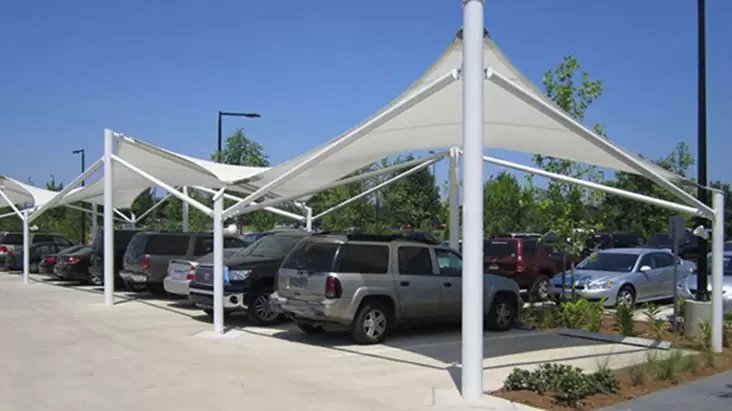
- Tensile Car Parking: The Tensile Car Parking buildings offer weatherproof and shaded parking areas that visitors and VIPs can use. They shield cars both against the sun and rain, as well as adhere to a unified design language with the stadium.
- Tensile Walkway Structure: A tensile walkway structure guarantees proper and easy movement of pedestrians among the parking lot, entrances, and facilities around it. These are walkways that improve the flow of crowds and promote the experience of the visitors.
Sports venues incorporate many tensile features, which give the structures a consistent layout of modernity.
More Rapid Construction and Economy
Of the important considerations in developing the stadium are time and budget. Tensile structures offer:
- Reduced installation schedules.
- Lower structural steel loads.
- Reduced long-run maintenance expenses.
Extensive lifespan and low maintenance enable them to be an economical investment for the owners and operators of stadiums.
Why is Royal Tensile SPL a Good Choice in Stadium Projects?
In terms of offering tensile solutions that are of global standards, Royal Tensile SPL is a company that can be relied on. Royal Tensile SPL has expertise in designing and implementing complex tensile structures of stadiums, which provide:
- Tailor-made solutions in design.
- Tensile membrane materials of high quality.
- End-to-end project execution.
- Large-scale experience on tensile structure projects.
Their all-inclusive attitude guarantees reliability, style, and functionality of all installations.
The Future of Tensile Structures as Stadium Designs
With the changes in the sports facilities, tensile structures will not go far in stadium construction. Their technological applications, which incorporate innovation, sustainability, and visual appeal, are what make them invaluable in next-generation stadiums. Tensile roofs, tensile car parks, and tensile walkways—tensile technology has not only revolutionized designing stadiums but has also given a new meaning to sporting architecture.
Conclusion
Tensile structures have transformed the current trends of building a stadium, as they are lightweight, provide freedom of architecture, are more comfortable, and have performance guaranteed as sustainable. Having professional suppliers such as Royal Tensile SPL, developers of the stadium may design visually pleasing, practical, and future-oriented sports facilities by developing a solution of tensile membrane constructions.