Tensile Roofing Systems in India for Architects & Builders
October 26, 2026 By admin
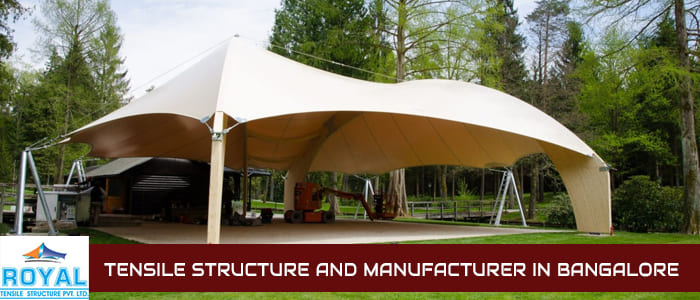
Tensile Roofing Systems in India for Architects & Builders
Tensile roofing systems are transforming modern construction across India by combining structural efficiency, aesthetic flexibility, and long-term durability. Architects and builders increasingly prefer tensile structures for commercial, public, and recreational projects because they offer innovative design possibilities while reducing construction weight and cost.
A tensile roofing system uses high-strength fabric membranes that are tensioned using steel cables and supporting frameworks. These structures rely on tension rather than compression, allowing large column-free spaces and visually striking architectural forms. With India’s rapidly growing infrastructure sector, tensile roofs are becoming a preferred solution for stadiums, airports, malls, metro stations, resorts, walkways, and industrial facilities.
Why Tensile Roofing is Ideal for Modern Indian Construction
1. Design Flexibility for Architects
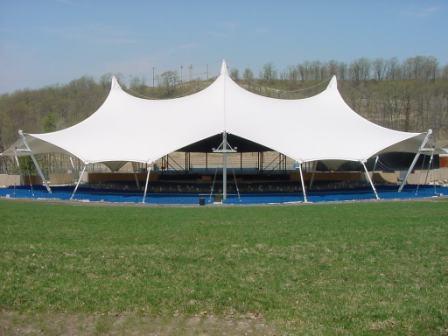
Tensile roofing enables architects to create unique and futuristic designs that traditional materials cannot achieve. The membrane fabric can be shaped into curves, cones, domes, and wave-like forms, helping designers deliver iconic structures that stand out. This flexibility allows creative freedom in both small and large-scale architectural projects.
2. Lightweight Yet Structurally Strong
Compared to conventional roofing systems, tensile structures are lightweight but extremely strong. The reduced structural load lowers foundation costs and makes them suitable for large-span areas such as auditoriums, sports complexes, and exhibition centers.
3. Faster Construction Time
Tensile roofing components are prefabricated and assembled on-site, significantly reducing construction time. Builders benefit from quicker project completion, lower labor costs, and minimized site disruptions.
4. Cost-Effective Large Span Solutions
For large commercial spaces, tensile roofing provides an economical alternative to steel and concrete structures. Less material consumption and quicker installation help developers optimize project budgets without compromising design quality.
5. Weather Resistance & Durability
Modern tensile membranes are engineered to withstand heavy rainfall, high UV exposure, dust, and wind loads—making them highly suitable for India’s diverse climatic conditions. These materials are corrosion-resistant and require minimal maintenance.
Common Applications in India
Tensile roofing systems are widely used in:
-
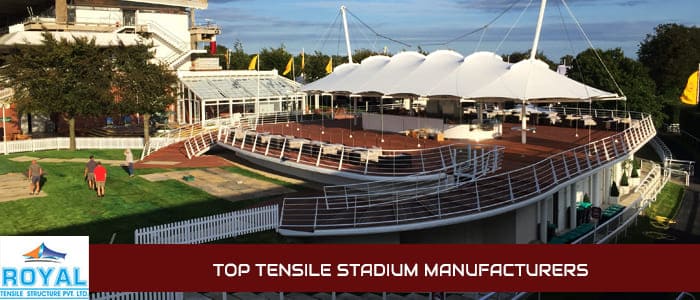
Stadium roofing and sports arenas
-
Airport terminals and transportation hubs
-
Shopping malls and commercial complexes
-
Hotel and resort landscaping structures
-
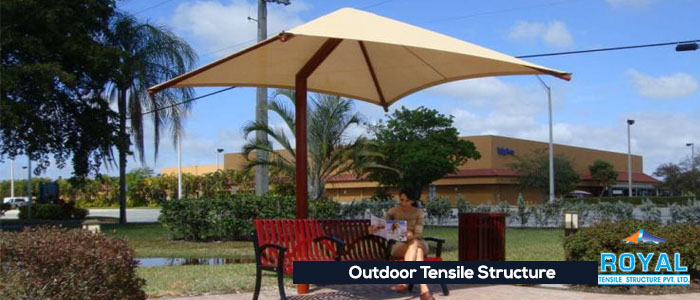
Entrance canopies and facade elements
-
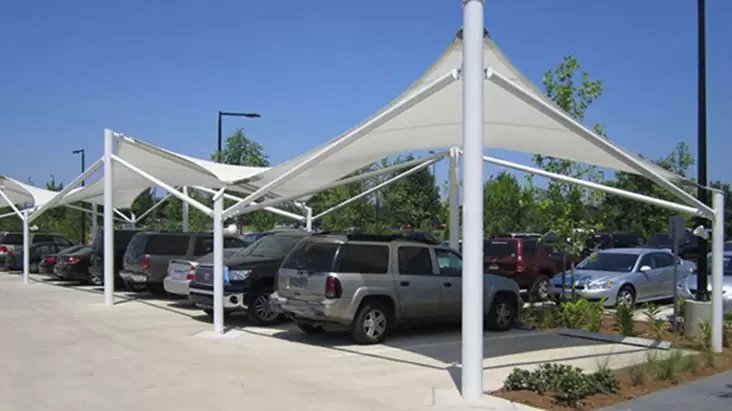
Walkways and parking sheds
-
Swimming pool covers and recreational zones
Their ability to cover large areas without intermediate columns makes them especially valuable for public infrastructure and high-footfall spaces.
Materials Used in Tensile Roofing
High-performance fabrics such as PVC-coated polyester, PTFE-coated fiberglass, and ETFE sheets are commonly used in tensile roofing projects. These materials offer excellent strength, fire resistance, light transmission, and long service life. The selection of material depends on project scale, environmental exposure, and architectural goals.
Sustainability Benefits
Tensile roofing systems support sustainable construction practices. The lightweight materials reduce carbon footprint during transportation and installation. Many membrane fabrics are recyclable and allow natural daylight to penetrate, reducing dependence on artificial lighting and lowering energy consumption.
Key Considerations for Architects & Builders
When planning a tensile roofing project, professionals should consider:
-
Site conditions and wind loads
-
Membrane material selection
-
Structural support design
-
Drainage planning
-
Fabric maintenance requirements
-
Compliance with Indian construction standards
Collaborating with experienced tensile structure manufacturers ensures precision engineering, safe installation, and long-term performance.
Future of Tensile Roofing in India
With rapid urbanization and growing demand for visually appealing yet functional infrastructure, tensile roofing systems are set to play a major role in India’s architectural future. Smart cities, modern transport hubs, commercial developments, and public utility projects are increasingly adopting tensile designs for their versatility and performance advantages.
Conclusion
Tensile roofing systems offer the perfect balance of aesthetics, efficiency, and durability for modern construction projects. For architects and builders in India, they provide unmatched design freedom, cost savings, and long-term structural reliability. As construction trends shift toward innovative and sustainable solutions, tensile roofing continues to emerge as a preferred choice across diverse industries.