How Tensile Structures Redefine Auditorium Design
September 13, 2026 By admin
How Tensile Structures Redefine Auditorium Design
Rigid materials, such as stone, concrete, and steel, were the sole dominant materials used to design auditoriums for centuries. These old buildings have been useful to us, yet they tend to restrict us in creativity and the period of construction. Usher in the era of tensile structure design, a design that has revolutionized the way we think and feel about the open areas of public gathering.
Breaking the Shackles of Traditions
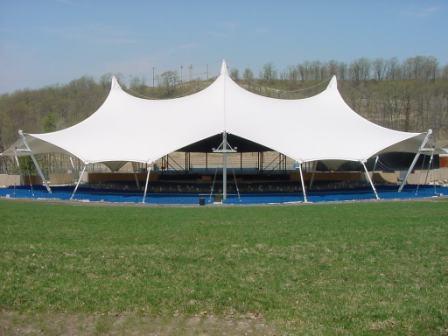
The conventional brick box auditoriums are associated with such inevitable problems as long construction processes, skyrocketing budgets, hard-and-fast acoustics, and, in many cases, uninspiring designs. Tensile auditorium structure breaks rules, and instead of using heavy and permanent structures, it uses lightweight canopies that appear to be floating. This is not a change in material but a change of architectural philosophy.
The Essentials of Redefining: Major Benefits :
Architectural Iconography and Soaring Forms
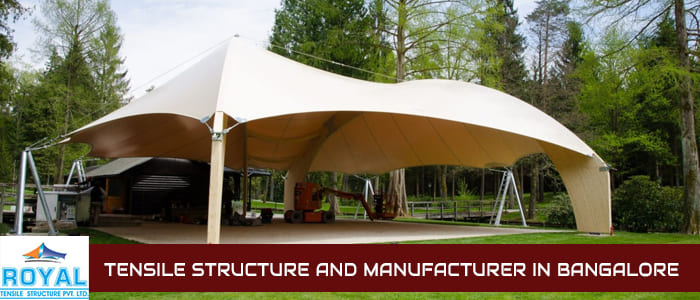
The shortest-term effect is visual. Tensile membrane structure technology can be swept and curvilinear in form, not available using traditional materials. These buildings form immediate landmarks—buildings that represent novelty dreams. They are messages to society that the interior area is devoted to creativity and innovation.
Acoustical Engineering
Quite on the contrary, a well-planned tensile auditorium structure has tremendous sound management. The membrane is also designed and coated in layers with an interior coating to have very specific reverberation times and sound diffusion. This creates incomparable sounds, from the faint murmur of a drama to the entirety of a symphony.
Unhindered, Column-Free Grandeur
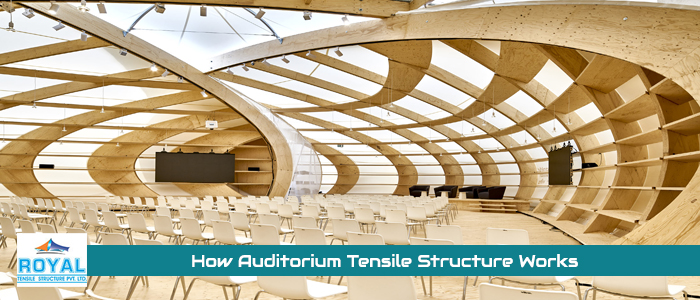
Such is the natural power of tensile fabric, allowing enormous column-free aisles. This is to say that all seats in the house are perfectly unimpeded. The space is immense, allowing it to provide an immersive atmosphere that makes the viewers even more connected to the performance.
Speed, Efficiency, and Sustainability
One of the redefinitions is the process of construction. The main elements of tensile structure are fabricated off-site, and their installation is much faster, and the amount of labor on-site is considerably decreased. This efficiency is converted to a reduced overall project footprint. Moreover, the recyclable nature of high-tech membranes (such as PTFE or PVC) and the possibility to incorporate natural elements enable the long-term energy consumption to be low, which makes it a sustainable option.
Outside the Main Stage: A Cohesive Tensile Ecosystem
The tensile architecture is not just limited to the main hall. This is likely to be a unified system of buildings in a comprehensive project.
Grand Entrances & Circulation
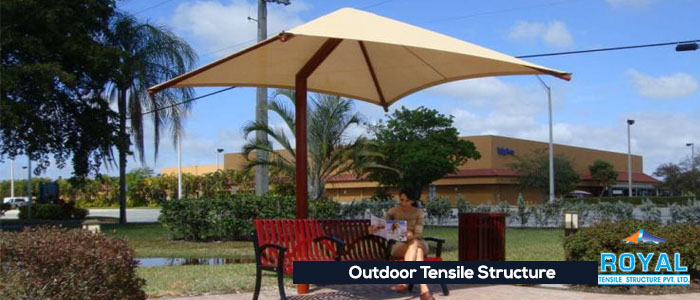
An impressive tensile walk structure would provide breathtaking weather-beaten access to the venue, developed up to the moment when a visitor is welcomed into the venue.
Integrated Infrastructure
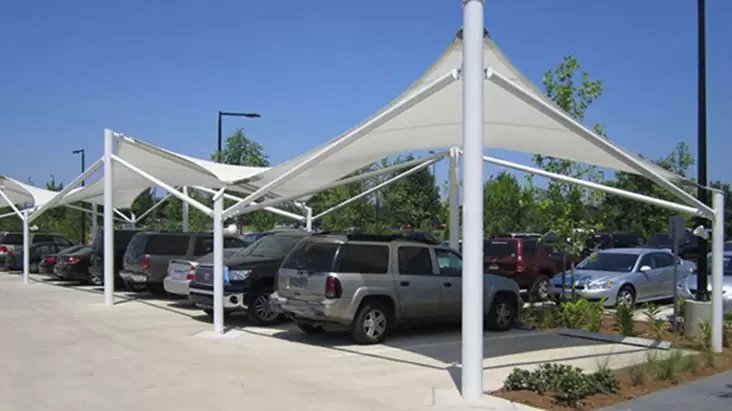
An adequately designed tensile car parking system would ensure that the practical requirements of the venue are accomplished with the identical architectural panache, and this is an augmentation of the general design and user experience.
Innovative Leadership: The Royal Tensile Standard of SPL
In the case of people who want to make such a visionary project come to life, it is important to collaborate with an industry leader. This is where talents such as Royal Tensile SPL would be very precious. Being an expert in high-tech tensile solutions, they bring into reality the engineering accuracy, materials science, and innovative teamwork to get an intricate design into reality. This has guaranteed that the Tensile Auditorium Structure is not just stunning but also can serve wonders over decades in durability, safety, and maintenance.
Addressing Common Concerns
There is nothing wrong with doubting this new paradigm.
Durability
Tensile membranes in modern times are designed in such a way that they can endure the harshest weather, are self-cleaning, and last longer than 30 years.
Insulation and Climate Control
Multi-layer systems are superior in terms of thermal and acoustic insulation, which makes them comfortable all year long.
Safety
The membranes are produced in the most advanced international fire-resistant and structural safety standards.
Summary: The Future is Plastic and Dreamy
Selecting a tensile structure for your auditorium is a wise choice regarding heritage, civic influence, and aesthetics. It goes beyond the building to make an interactive and highly inspiring icon. It reinvents the auditorium as a stagnant vessel of art into a living work of art, a cultural aspiration that opens to its community a canopy of contemporary possibilities.