What is Tensile Structure Car Parking? The Complete Guide for India
September 22, 2026 By admin
What is a Tensile Structure Car Parking? The Complete Guide for India
In the fast-urbanizing environment in India, the issue of efficient, affordable, yet good-looking parking is like never before. Enter Tensile Structure Car Parking, a contemporary architectural marvel that is reshaping the way in which we dedicate ourselves to covering our cars. However, what is it, and why is it becoming the choice of residential societies, commercial complexes, and open spaces that are cropping up all over India? It is this all-inclusive manual that will unlock all that you will require to know about tensile car parking in the Indian setup.
1: The Basics of Tensile Structures
What is a tensile structure? A tensile fabric structure is essentially a building framework in which the membrane’s load-bearing is attained through the tension that is applied to the fabric membrane. Tensile structures (a mix of tensile and compression) are used in comparison to traditional rigid structures (RCC or steel sheds), which are based on compression.
- High-Strength Fabric Membrane: (Normally, PVC-coated polyester, PTFE-coated glass, or ETFE foil).
- Helping Framework: Steel masts, cables, and/or perimeter fittings.
- Foundation: Tethered to tie down the whole system.
In the case of parking, this will result in a lightweight, durable, and flexible canopy that will be a good source of canopy and coverage.
2: Why Tensile Car Parking is the Perfect Wager in India
The Indian climate and economic nature precondition the peculiar suitability of tensile structures.
- Exceptional Climate Protection: The fabric membranes are also designed to reflect up to 80 percent of the sun’s rays and thus help in preventing overheating under the cloth—an imperative under the Indian summer. They are also rainproof, making the vehicles resistant to monsoon rain.
- Cost-Effectiveness: Tensile car parking solutions offer 30-50% reductions in the initial cost and require substantially less time to construct than traditional RCC parking facilities, and little area disturbance.
- Design Flexibility and Beauty: It can be built in dramatic and fluid lines, conical, hyperbolic, or parabolic, in such a way that it adds beauty to any form of building, and it can be a luxury apartment or a big commercial mall.
- Durability & Low Maintenance: The quality fabrics are UV resistant, corrosion resistant, and mildew as well as fire resistant (Class B1 / B2 standard). Water bathing is sometimes all that is required.
- Natural Light and Ventilation: The material could be translucent, and therefore diffused natural light could pass through during the day, and thus minimal artificial lighting is required, and there is no sense of being closed-in.
3: Major Uses of the Tensile Structures in India
Although we speak specifically of parking, the technology drives various architectural wonders:
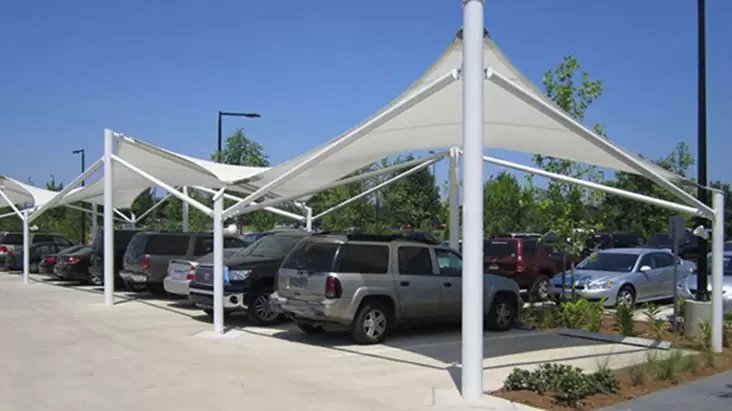
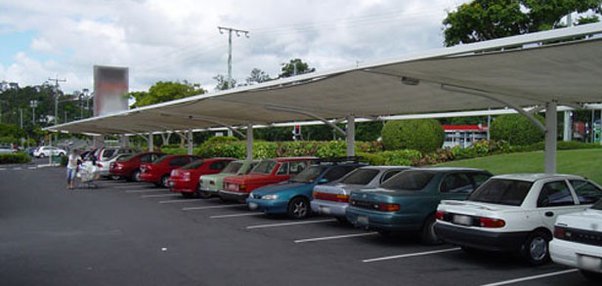
- Tensile Car Parking: Tensile car parking is used in residential societies, hotels, IT parks, malls, and airports.
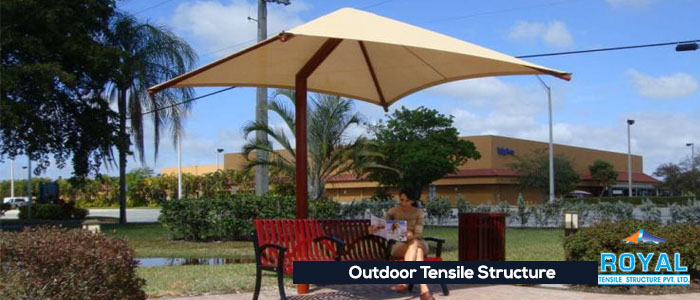
- Tensile Walkway Structure: This involves creating shaded paths in between buildings on campuses, in hospitals, and in institutional areas.
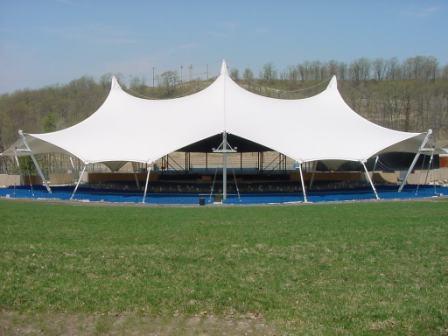
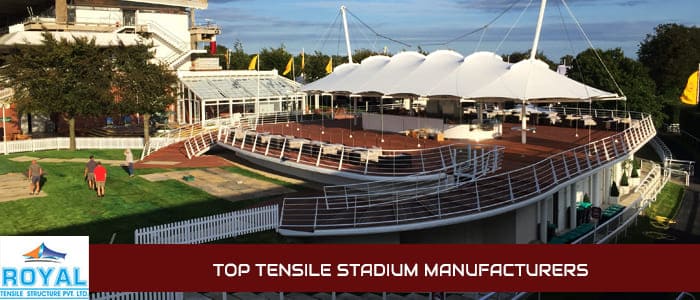
- Tensile Stadium Structure: Unique roofing of sports arenas, swimming pools, and auditoriums with big spans without columns.
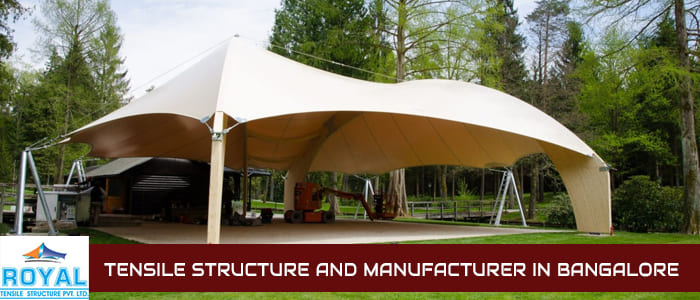
- Tensile Fabric Structure: This is a general term that encompasses canopies, skylights, facade covers, and temporary event pavilions.
4: Critical Considerations for Installation in India
The following are some of the things to consider before investing:
- Local Municipal Approaches: Building bylaws differ between cities (NDMC, BMC, etc.). The reputed suppliers, such as Royal Tensile SPL, tend to help in the clearance of approval procedures.
- Site-Specific Engineering: Wind load (according to IS 875), snow load (in the case of Himalayan regions), and drainage design and construction in heavy monsoon rain are engineered critically.
- Fabric Quality: The fabric should be certified, fire-retardant, and high-tenacity fabric from renowned manufacturers (e.g., Mehler, Serge Ferrari, and Sattler).
- Structural Integrity: It has to be hot-dip galvanized to stop rust in damp environments (steel support system (pipes, cables, fittings)).
5: Brands and Quality in the Indian Market
There are domestic counterfeiters and high-end experts in the market. Although there are a lot of contractors and they propose solutions, it is important to consider expertise rather than simply the price. Some of the companies, such as Royal Tensile SPL, have achieved a reputation by concentrating on engineered solutions, quality materials, and after-sales services so that the structure would meet the test of time and weather.
Always ask for:
- Project portfolio
- Material certificates
- Elaborate technical calculations.
- Warranty (10+ years on fabrics, 20+ on structure)
6: Cost Breakdown & ROI
The costs of a tensile structure parking facility in India generally vary within the range of 300 to 800 rupees per square foot, in that it depends on:
- Design complexity
- Fabric quality and brand
- Span and height
- Site accessibility
The payback is not only seen in capital savings but also in property value upsurge, lower vehicle maintenance charges (solar/rain damage), and user-friendliness.
Final Conclusion: Parking in India Will Be Flexible and Smart in the Future
Tensile Structure Car Parking is not a shade; it is an intelligent, sustainable, and fashionable infrastructure that is directly geared towards the urban future of India. It can be integrated with solar panels or EV charging stations underneath in the future, since it can be modified. As a resident welfare association (RWA), commercial developer, or institutional planner, this is the first step towards making an informed, future-proof investment.